


Category: Retina
A Blow to the Eye: Managing Traumatic Eye Disease from Commotio Retinae to Macular Hole: A Case Report
 Save as PDF
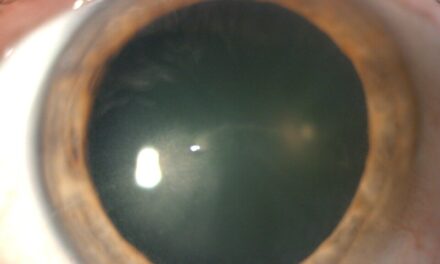
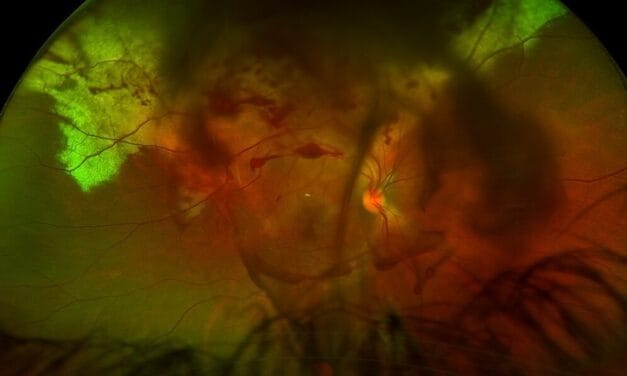
A 39-year-old African-American male presented with sudden, acute loss of vision in his right eye following blunt force trauma involving a soccer ball to the right eye the day before.
Read More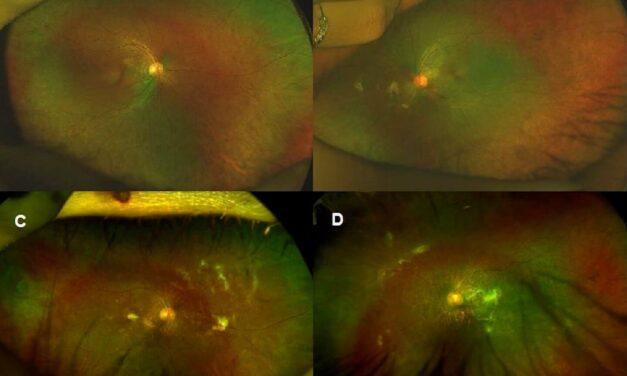
Kearns-Sayre Syndrome with a Finding of Unique Subretinal Hyperreflective Deposits: A Case Report
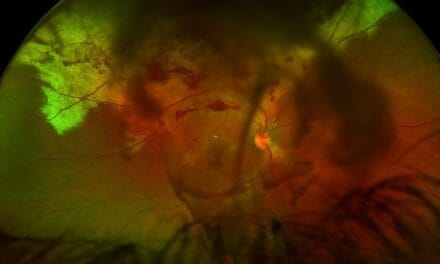
Save as PDFThe identification of multiple subretinal hyperreflective deposits in this patient with Kearns-Sayre syndrome highlights a rarely reported manifestation of the disease.
Read More
A Case of Multiple Evanescent White Dot Syndrome in a Myopic Male
Save as PDFThis paper details a case of MEWDS in a seldom-affected gender and emphasizes the benefit of early, multimodal diagnostic imaging to confirm the…
Read More
Case Report: Genetically Confirmed Best Vitelliform Macular Dystrophy and Butterfly Pattern Dystrophy in the Same Family
Save as PDFBest vitelliform macular dystrophy (BVMD) is a relatively common inherited retinal disease caused by one of hundreds of known mutations in the…
Read More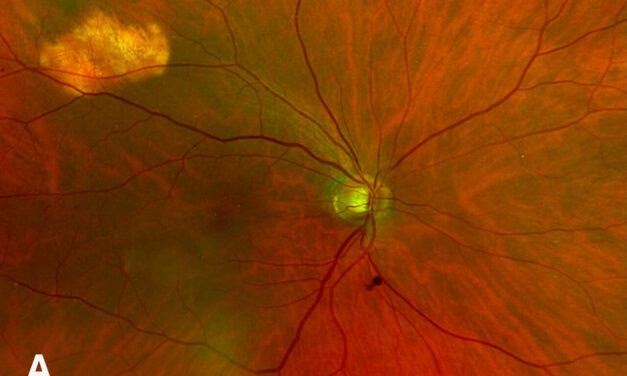
Photo Essay: Sclerochoroidal Calcifications
Save as PDFSclerochoroidal calcifications are uncommon, benign choroidal lesions of calcific deposition occurring at the oblique extraocular muscle insertion.
Read More
A Crystal Conundrum: Differential Diagnoses for Crystalline Retinopathy and Features of OCT Angiography in Macular Telangiectasia Type 2
Save as PDFMacular telangiectasia (MacTel) type 2 frequently presents with intraretinal crystals along with the characteristic abnormal vessel development.
Read More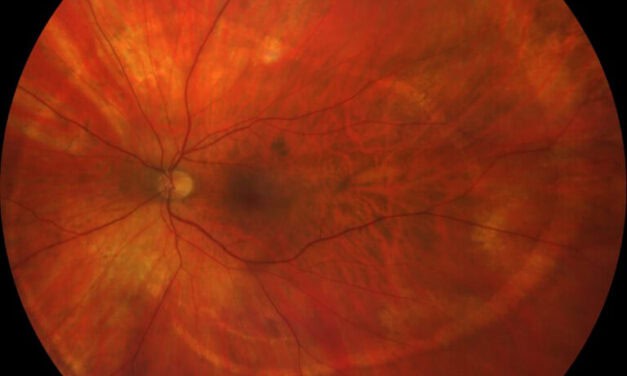
Photo Essay – A Spiral Illusion: An Atypical Presentation of Schlaegel Lines
Save as PDFThis case describes an unusual spiral pattern of Schlaegel lines in a patient with inactive multifocal choroiditis. Although most often associated with…
Read More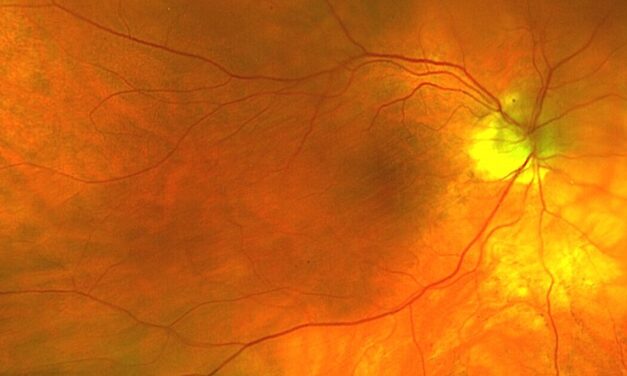
Navigating Choroidal Folds: A Comprehensive Approach for the Primary Care Optometrist
Save as PDFChoroidal folds are a key indicator of ocular or systemic pathology, with their typical horizontal orientation reflecting underlying anatomical and…
Read More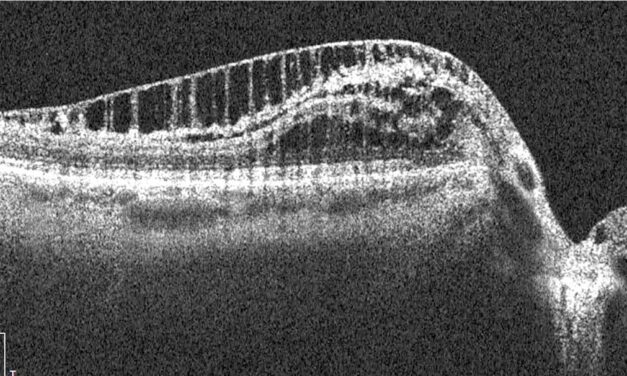
Paradoxical Progression in Nerve Fiber Analysis from Peripapillary Retinoschisis
Save as PDFPeripapillary retinoschisis (PPRS) can cause fluctuations in retinal nerve fiber layer thickness; thus, the spontaneous resolution of PPRS can mimic…
Read More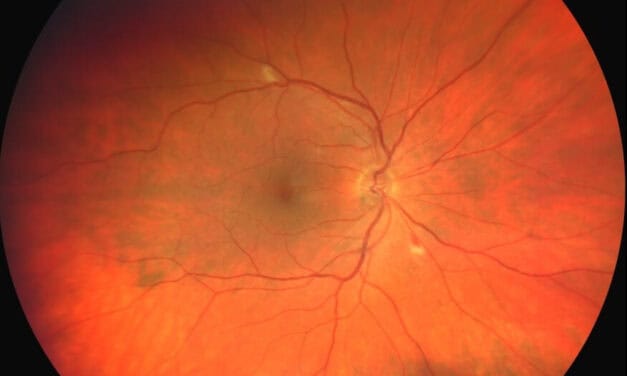
Anemic Retinopathy Secondary to Babesiosis Infection
Save as PDFBabesiosis can cause hemolytic anemia through both infectious and autoimmune processes. Anemic retinopathy can occur due to Babesiosis and…
Read More
Pseudoxanthoma Elasticum and Angioid Streaks
Save as PDFPXE is a critical multisystem disease that often presents with readily visible dermatologic manifestations and clinically typical fundus exam findings…
Read More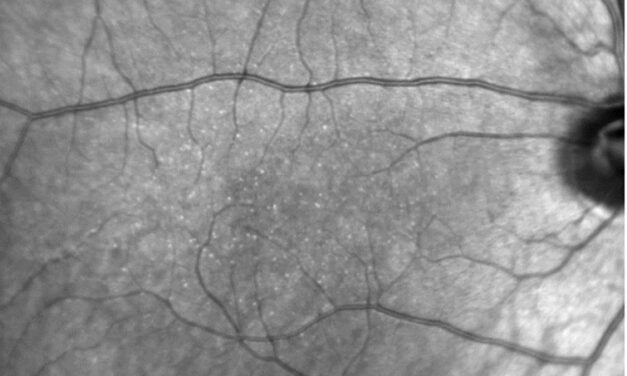
Benign Yellow Dot Maculopathy
Save as PDFThis case of Benign Yellow Dot Maculopathy represents a unique phenotype that has limited coverage in existing literature. To date, only 48 cases…
Read More
Guess the Disease: When the Great Masquerader Unveils Its Disguise
Save as PDFA 49-year-old white man presented to the eye clinic due to sudden-onset scotoma in the right eye. The scotoma was inferior to fixation. He noticed it…
Read More
Assessing Risk of Neovascular Sequelae in Central Retinal Vein Occlusion
Save as PDFDifferentiation between ischemic and non-ischemic central retinal vein occlusions provides valuable information regarding visual prognosis and risk of…
Read More
Post-operative Hypotony And Choroidal Effusion Following Cataract Surgery Suture Removal
Save as PDFOcular hypotony can occur for a variety of reasons, including but not limited to ocular inflammation, glaucoma filtration surgery, or trauma…
Read More
Hyperviscosity-Related Retinopathy and Serous Macular Detachment in Waldenstrӧm Macroglobulinemia Managed With Zanubrutinib
Save as PDFWaldenstrom macroglobulinemia (WM) is an uncommon lymphoproliferative B-cell disorder characterized by overproduction of monoclonal…
Read More
Multimodal Imaging in the Diagnosis of Solar Retinopathy Secondary to Viewing Solar Eclipse with Inadequate Eye Protection
Save as PDFMultimodal imaging and a thorough case history can aid in the diagnosis of solar maculopathy. OCT and fundus autofluorescence can identify small…
Read More
Management of a Retinal Arterial Macroaneurysm
Save as PDFWhile patients with RAMs are often asymptomatic, providers must be able to clinically differentiate them from other retinal conditions so they can manage and counsel patients appropriately. This case report reviews the anatomical features, risk factors, clinical course, pathophysiology, and treatment options for potential sequelae of a RAM.
Read More
The Phenomenon of Quiescent Tomographically-Detected Macular Neovascularization
Save as PDFMacular neovascularization (MNV) is a pathophysiological precursor to local tissue destruction. Age-related macular degeneration is the predominant disease for MNV incidence. The spectrum of macular neovascular morphologies can be studied with optical coherence tomography angiography (OCTA) imaging and observed for vision-threatening activity.
Read More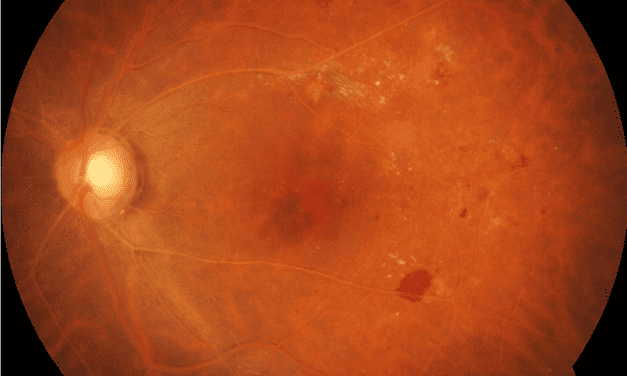
Highlighting hypertriglyceridemia with a case of lipemia retinalis
Save as PDFSevere hypertriglyceridemia can transiently cause the appearance of a salmon-colored fundus with creamy vessels which is known as lipemia retinalis
Read More
In Partnership With

Our Authors