


Blog
The Blog Module
The blog modules makes it easy to create a blog post feed in two different layouts.

Impact of Diabetes on Visual Function in Veterans with Optic Disc Drusen: A Comparative Study
Optic disc drusen (ODD) are present in up to 2% of the general population. The presence of ODD can result in vision loss. This study investigated…

Dolicoectatic Compression of the Optic Tract: A Case Report
Dolichoectasia is an arterial disease that causes dilation or tortuosity of the impaired vessel. It most commonly affects the vertebrobasilar system and the internal carotid artery. Although most cases are asymptomatic, the condition may manifest by symptoms of headache, vertigo, visual disturbance, or signs of cranial nerve impairment.

Management of a Retinal Arterial Macroaneurysm
While patients with RAMs are often asymptomatic, providers must be able to clinically differentiate them from other retinal conditions so they can manage and counsel patients appropriately. This case report reviews the anatomical features, risk factors, clinical course, pathophysiology, and treatment options for potential sequelae of a RAM.

Argyrosis: A Case Of Caruncle And Conjunctival Discoloration Due To Homeopathic Colloidal Silver Eye Drops
While argyria and argyrosis are largely only of cosmetic concern, healthcare providers and the public should be aware of the possibility of their development with chronic silver exposure, especially due to its permanence once developed.
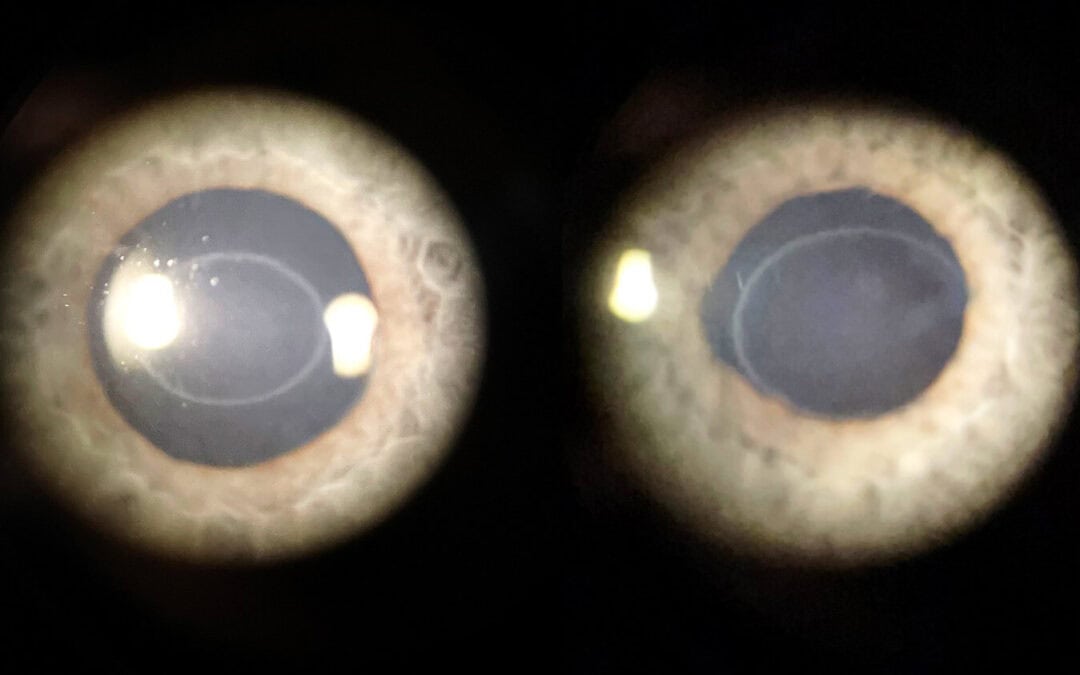
Bilateral Idiopathic Corneal Ring Opacity (Ascher Ring)
Bilateral idiopathic ring-shaped opacification of the midperipheral corneal stroma – often referred to as Ascher ring – is an extremely rare finding reported only sparsely in the literature.

Editor’s Column May 2024
Reader, think critically when going over these articles. Don’t just read them to check out interesting cases (although the case in Neuro Nuggets is quite interesting and unique), use them to change the way you practice and care for your patients. I know I take something away from every issue.

Decoding Alphabet Soup
we should consider whether it is necessary to use acronyms as opposed to the full terminology. With advancements in smartphrase technology in our electronic health record (EHR) systems perhaps we can move to using full terminology in our clinical notes to decode the alphabet soup for the sake of our fellow medical colleagues.

Junctional Scotoma From Self-Inflicted Transnasal Penetrating Foreign Body
The case presented here is unique in that the visual field defect was highly suggestive of optic nerve and chiasm damage. The transnasal route of injury in this case is similar to the route of pituitary tumor surgical removal (i.e. transsphenoidal). To the best of our knowledge, this may be the first published case of transnasal penetrating foreign body injury that resulted in a junctional scotoma.

Don’t Trust Your Gut – Part 1
In the context of our topic of evidence-based medicine, are our experiences and expert opinions a reliable source of evidence? If not, why not? If so, how much should we rely on experience and opinion (whether ours or others) to guide our clinical decision-making?

Importance of Ancillary Testing for Voriconazole-Induced Short Term Transient Visual Disturbances
Voriconazole is in the class of triazole antifungal medications which can cause various ocular side effects including subjective visual disturbances. This emphasizes the importance of ancillary testing to evaluate for ocular toxicity
Impact of Diabetes on Visual Function in Veterans with Optic Disc Drusen: A Comparative Study
Optic disc drusen (ODD) are present in up to 2% of the general population. The presence of ODD can result in vision loss. This study investigated…
Dolicoectatic Compression of the Optic Tract: A Case Report
Dolichoectasia is an arterial disease that causes dilation or tortuosity of the impaired vessel. It most commonly affects the vertebrobasilar system and the internal carotid artery. Although most cases are asymptomatic, the condition may manifest by symptoms of headache, vertigo, visual disturbance, or signs of cranial nerve impairment.
Management of a Retinal Arterial Macroaneurysm
While patients with RAMs are often asymptomatic, providers must be able to clinically differentiate them from other retinal conditions so they can manage and counsel patients appropriately. This case report reviews the anatomical features, risk factors, clinical course, pathophysiology, and treatment options for potential sequelae of a RAM.
Argyrosis: A Case Of Caruncle And Conjunctival Discoloration Due To Homeopathic Colloidal Silver Eye Drops
While argyria and argyrosis are largely only of cosmetic concern, healthcare providers and the public should be aware of the possibility of their development with chronic silver exposure, especially due to its permanence once developed.
Bilateral Idiopathic Corneal Ring Opacity (Ascher Ring)
Bilateral idiopathic ring-shaped opacification of the midperipheral corneal stroma – often referred to as Ascher ring – is an extremely rare finding reported only sparsely in the literature.
Editor’s Column May 2024
Reader, think critically when going over these articles. Don’t just read them to check out interesting cases (although the case in Neuro Nuggets is quite interesting and unique), use them to change the way you practice and care for your patients. I know I take something away from every issue.
Decoding Alphabet Soup
we should consider whether it is necessary to use acronyms as opposed to the full terminology. With advancements in smartphrase technology in our electronic health record (EHR) systems perhaps we can move to using full terminology in our clinical notes to decode the alphabet soup for the sake of our fellow medical colleagues.
Junctional Scotoma From Self-Inflicted Transnasal Penetrating Foreign Body
The case presented here is unique in that the visual field defect was highly suggestive of optic nerve and chiasm damage. The transnasal route of injury in this case is similar to the route of pituitary tumor surgical removal (i.e. transsphenoidal). To the best of our knowledge, this may be the first published case of transnasal penetrating foreign body injury that resulted in a junctional scotoma.
Don’t Trust Your Gut – Part 1
In the context of our topic of evidence-based medicine, are our experiences and expert opinions a reliable source of evidence? If not, why not? If so, how much should we rely on experience and opinion (whether ours or others) to guide our clinical decision-making?
Importance of Ancillary Testing for Voriconazole-Induced Short Term Transient Visual Disturbances
Voriconazole is in the class of triazole antifungal medications which can cause various ocular side effects including subjective visual disturbances. This emphasizes the importance of ancillary testing to evaluate for ocular toxicity
Impact of Diabetes on Visual Function in Veterans with Optic Disc Drusen: A Comparative Study
Optic disc drusen (ODD) are present in up to 2% of the general population. The presence of ODD can result in vision loss. This study investigated…
Dolicoectatic Compression of the Optic Tract: A Case Report
Dolichoectasia is an arterial disease that causes dilation or tortuosity of the impaired vessel. It most commonly affects the vertebrobasilar system and the internal carotid artery. Although most cases are asymptomatic, the condition may manifest by symptoms of headache, vertigo, visual disturbance, or signs of cranial nerve impairment.
Management of a Retinal Arterial Macroaneurysm
While patients with RAMs are often asymptomatic, providers must be able to clinically differentiate them from other retinal conditions so they can manage and counsel patients appropriately. This case report reviews the anatomical features, risk factors, clinical course, pathophysiology, and treatment options for potential sequelae of a RAM.
Argyrosis: A Case Of Caruncle And Conjunctival Discoloration Due To Homeopathic Colloidal Silver Eye Drops
While argyria and argyrosis are largely only of cosmetic concern, healthcare providers and the public should be aware of the possibility of their development with chronic silver exposure, especially due to its permanence once developed.
Bilateral Idiopathic Corneal Ring Opacity (Ascher Ring)
Bilateral idiopathic ring-shaped opacification of the midperipheral corneal stroma – often referred to as Ascher ring – is an extremely rare finding reported only sparsely in the literature.
Editor’s Column May 2024
Reader, think critically when going over these articles. Don’t just read them to check out interesting cases (although the case in Neuro Nuggets is quite interesting and unique), use them to change the way you practice and care for your patients. I know I take something away from every issue.
Decoding Alphabet Soup
we should consider whether it is necessary to use acronyms as opposed to the full terminology. With advancements in smartphrase technology in our electronic health record (EHR) systems perhaps we can move to using full terminology in our clinical notes to decode the alphabet soup for the sake of our fellow medical colleagues.
Junctional Scotoma From Self-Inflicted Transnasal Penetrating Foreign Body
The case presented here is unique in that the visual field defect was highly suggestive of optic nerve and chiasm damage. The transnasal route of injury in this case is similar to the route of pituitary tumor surgical removal (i.e. transsphenoidal). To the best of our knowledge, this may be the first published case of transnasal penetrating foreign body injury that resulted in a junctional scotoma.
Don’t Trust Your Gut – Part 1
In the context of our topic of evidence-based medicine, are our experiences and expert opinions a reliable source of evidence? If not, why not? If so, how much should we rely on experience and opinion (whether ours or others) to guide our clinical decision-making?
Importance of Ancillary Testing for Voriconazole-Induced Short Term Transient Visual Disturbances
Voriconazole is in the class of triazole antifungal medications which can cause various ocular side effects including subjective visual disturbances. This emphasizes the importance of ancillary testing to evaluate for ocular toxicity
Impact of Diabetes on Visual Function in Veterans with Optic Disc Drusen: A Comparative Study
Optic disc drusen (ODD) are present in up to 2% of the general population. The presence of ODD can result in vision loss. This study investigated…
Dolicoectatic Compression of the Optic Tract: A Case Report
Dolichoectasia is an arterial disease that causes dilation or tortuosity of the impaired vessel. It most commonly affects the vertebrobasilar system and the internal carotid artery. Although most cases are asymptomatic, the condition may manifest by symptoms of headache, vertigo, visual disturbance, or signs of cranial nerve impairment.
Management of a Retinal Arterial Macroaneurysm
While patients with RAMs are often asymptomatic, providers must be able to clinically differentiate them from other retinal conditions so they can manage and counsel patients appropriately. This case report reviews the anatomical features, risk factors, clinical course, pathophysiology, and treatment options for potential sequelae of a RAM.
Argyrosis: A Case Of Caruncle And Conjunctival Discoloration Due To Homeopathic Colloidal Silver Eye Drops
While argyria and argyrosis are largely only of cosmetic concern, healthcare providers and the public should be aware of the possibility of their development with chronic silver exposure, especially due to its permanence once developed.
Bilateral Idiopathic Corneal Ring Opacity (Ascher Ring)
Bilateral idiopathic ring-shaped opacification of the midperipheral corneal stroma – often referred to as Ascher ring – is an extremely rare finding reported only sparsely in the literature.
Editor’s Column May 2024
Reader, think critically when going over these articles. Don’t just read them to check out interesting cases (although the case in Neuro Nuggets is quite interesting and unique), use them to change the way you practice and care for your patients. I know I take something away from every issue.
Decoding Alphabet Soup
we should consider whether it is necessary to use acronyms as opposed to the full terminology. With advancements in smartphrase technology in our electronic health record (EHR) systems perhaps we can move to using full terminology in our clinical notes to decode the alphabet soup for the sake of our fellow medical colleagues.
Junctional Scotoma From Self-Inflicted Transnasal Penetrating Foreign Body
The case presented here is unique in that the visual field defect was highly suggestive of optic nerve and chiasm damage. The transnasal route of injury in this case is similar to the route of pituitary tumor surgical removal (i.e. transsphenoidal). To the best of our knowledge, this may be the first published case of transnasal penetrating foreign body injury that resulted in a junctional scotoma.
Don’t Trust Your Gut – Part 1
In the context of our topic of evidence-based medicine, are our experiences and expert opinions a reliable source of evidence? If not, why not? If so, how much should we rely on experience and opinion (whether ours or others) to guide our clinical decision-making?
Importance of Ancillary Testing for Voriconazole-Induced Short Term Transient Visual Disturbances
Voriconazole is in the class of triazole antifungal medications which can cause various ocular side effects including subjective visual disturbances. This emphasizes the importance of ancillary testing to evaluate for ocular toxicity
Impact of Diabetes on Visual Function in Veterans with Optic Disc Drusen: A Comparative Study
Optic disc drusen (ODD) are present in up to 2% of the general population. The presence of ODD can result in vision loss. This study investigated…
Dolicoectatic Compression of the Optic Tract: A Case Report
Dolichoectasia is an arterial disease that causes dilation or tortuosity of the impaired vessel. It most commonly affects the vertebrobasilar system and the internal carotid artery. Although most cases are asymptomatic, the condition may manifest by symptoms of headache, vertigo, visual disturbance, or signs of cranial nerve impairment.
Management of a Retinal Arterial Macroaneurysm
While patients with RAMs are often asymptomatic, providers must be able to clinically differentiate them from other retinal conditions so they can manage and counsel patients appropriately. This case report reviews the anatomical features, risk factors, clinical course, pathophysiology, and treatment options for potential sequelae of a RAM.
Argyrosis: A Case Of Caruncle And Conjunctival Discoloration Due To Homeopathic Colloidal Silver Eye Drops
While argyria and argyrosis are largely only of cosmetic concern, healthcare providers and the public should be aware of the possibility of their development with chronic silver exposure, especially due to its permanence once developed.
Bilateral Idiopathic Corneal Ring Opacity (Ascher Ring)
Bilateral idiopathic ring-shaped opacification of the midperipheral corneal stroma – often referred to as Ascher ring – is an extremely rare finding reported only sparsely in the literature.
Editor’s Column May 2024
Reader, think critically when going over these articles. Don’t just read them to check out interesting cases (although the case in Neuro Nuggets is quite interesting and unique), use them to change the way you practice and care for your patients. I know I take something away from every issue.
Decoding Alphabet Soup
we should consider whether it is necessary to use acronyms as opposed to the full terminology. With advancements in smartphrase technology in our electronic health record (EHR) systems perhaps we can move to using full terminology in our clinical notes to decode the alphabet soup for the sake of our fellow medical colleagues.
Junctional Scotoma From Self-Inflicted Transnasal Penetrating Foreign Body
The case presented here is unique in that the visual field defect was highly suggestive of optic nerve and chiasm damage. The transnasal route of injury in this case is similar to the route of pituitary tumor surgical removal (i.e. transsphenoidal). To the best of our knowledge, this may be the first published case of transnasal penetrating foreign body injury that resulted in a junctional scotoma.
Don’t Trust Your Gut – Part 1
In the context of our topic of evidence-based medicine, are our experiences and expert opinions a reliable source of evidence? If not, why not? If so, how much should we rely on experience and opinion (whether ours or others) to guide our clinical decision-making?
Importance of Ancillary Testing for Voriconazole-Induced Short Term Transient Visual Disturbances
Voriconazole is in the class of triazole antifungal medications which can cause various ocular side effects including subjective visual disturbances. This emphasizes the importance of ancillary testing to evaluate for ocular toxicity
Impact of Diabetes on Visual Function in Veterans with Optic Disc Drusen: A Comparative Study
Optic disc drusen (ODD) are present in up to 2% of the general population. The presence of ODD can result in vision loss. This study investigated…
Dolicoectatic Compression of the Optic Tract: A Case Report
Dolichoectasia is an arterial disease that causes dilation or tortuosity of the impaired vessel. It most commonly affects the vertebrobasilar system and the internal carotid artery. Although most cases are asymptomatic, the condition may manifest by symptoms of headache, vertigo, visual disturbance, or signs of cranial nerve impairment.
Management of a Retinal Arterial Macroaneurysm
While patients with RAMs are often asymptomatic, providers must be able to clinically differentiate them from other retinal conditions so they can manage and counsel patients appropriately. This case report reviews the anatomical features, risk factors, clinical course, pathophysiology, and treatment options for potential sequelae of a RAM.
Argyrosis: A Case Of Caruncle And Conjunctival Discoloration Due To Homeopathic Colloidal Silver Eye Drops
While argyria and argyrosis are largely only of cosmetic concern, healthcare providers and the public should be aware of the possibility of their development with chronic silver exposure, especially due to its permanence once developed.
Bilateral Idiopathic Corneal Ring Opacity (Ascher Ring)
Bilateral idiopathic ring-shaped opacification of the midperipheral corneal stroma – often referred to as Ascher ring – is an extremely rare finding reported only sparsely in the literature.
Editor’s Column May 2024
Reader, think critically when going over these articles. Don’t just read them to check out interesting cases (although the case in Neuro Nuggets is quite interesting and unique), use them to change the way you practice and care for your patients. I know I take something away from every issue.
Decoding Alphabet Soup
we should consider whether it is necessary to use acronyms as opposed to the full terminology. With advancements in smartphrase technology in our electronic health record (EHR) systems perhaps we can move to using full terminology in our clinical notes to decode the alphabet soup for the sake of our fellow medical colleagues.
Junctional Scotoma From Self-Inflicted Transnasal Penetrating Foreign Body
The case presented here is unique in that the visual field defect was highly suggestive of optic nerve and chiasm damage. The transnasal route of injury in this case is similar to the route of pituitary tumor surgical removal (i.e. transsphenoidal). To the best of our knowledge, this may be the first published case of transnasal penetrating foreign body injury that resulted in a junctional scotoma.
Don’t Trust Your Gut – Part 1
In the context of our topic of evidence-based medicine, are our experiences and expert opinions a reliable source of evidence? If not, why not? If so, how much should we rely on experience and opinion (whether ours or others) to guide our clinical decision-making?
Importance of Ancillary Testing for Voriconazole-Induced Short Term Transient Visual Disturbances
Voriconazole is in the class of triazole antifungal medications which can cause various ocular side effects including subjective visual disturbances. This emphasizes the importance of ancillary testing to evaluate for ocular toxicity