


Blog
The Blog Module
The blog modules makes it easy to create a blog post feed in two different layouts.

The Phenomenon of Quiescent Tomographically-Detected Macular Neovascularization
Macular neovascularization (MNV) is a pathophysiological precursor to local tissue destruction. Age-related macular degeneration is the predominant disease for MNV incidence. The spectrum of macular neovascular morphologies can be studied with optical coherence tomography angiography (OCTA) imaging and observed for vision-threatening activity.
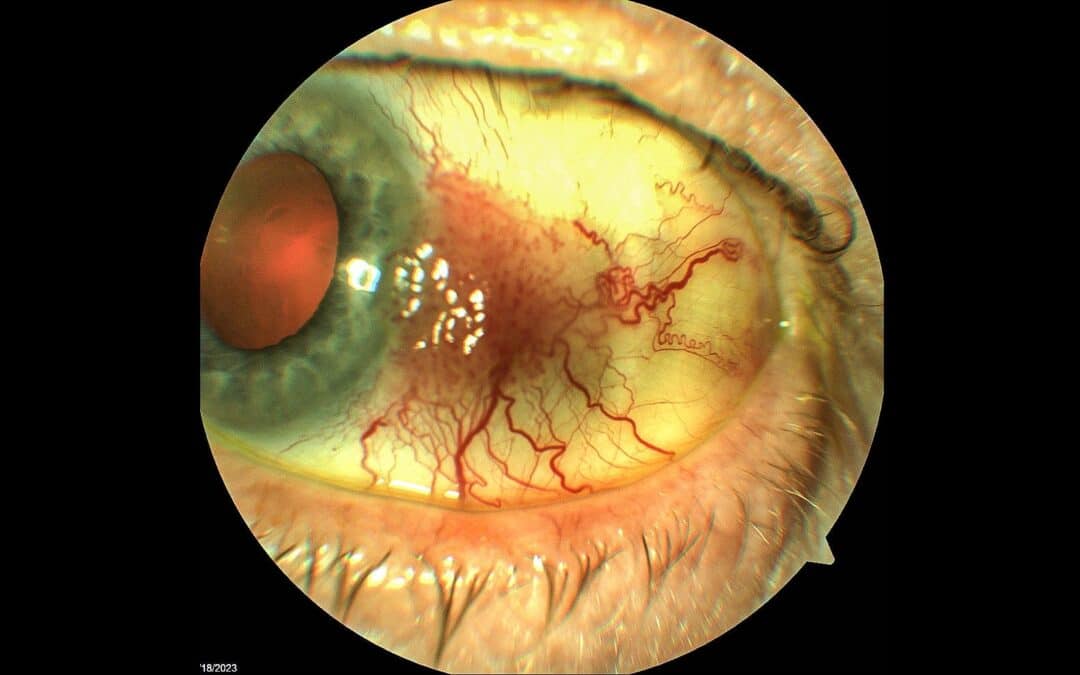
PHOTO ESSAY: “New” Red Eye – A Case of Conjunctival Intraepithelial Neoplasia
Ocular surface squamous neoplasia (OSSN) covers a wide range of ocular diseases that affect the squamous epithelial cells on the surface of the eye. This includes conjunctival intraepithelial neoplasia, corneal epithelial dysplasia, squamous cell carcinoma, and mucoepidermoid carcinoma. Anterior segment OCT can be used to differentiate between CIN and other benign conjunctival lesions, by evaluating for epithelial activity, stromal invasion, and corneal involvement.

Highlighting hypertriglyceridemia with a case of lipemia retinalis
Severe hypertriglyceridemia can transiently cause the appearance of a salmon-colored fundus with creamy vessels which is known as lipemia retinalis

Diagnosing Macular Telangiectasia Type 2
MacTel type 2 is the most common subtype that results in atrophic changes and sometimes subretinal neovascularization (SRN). This case report will focus on a patient with MacTel type 2 and the management and treatment options pertinent to the case.
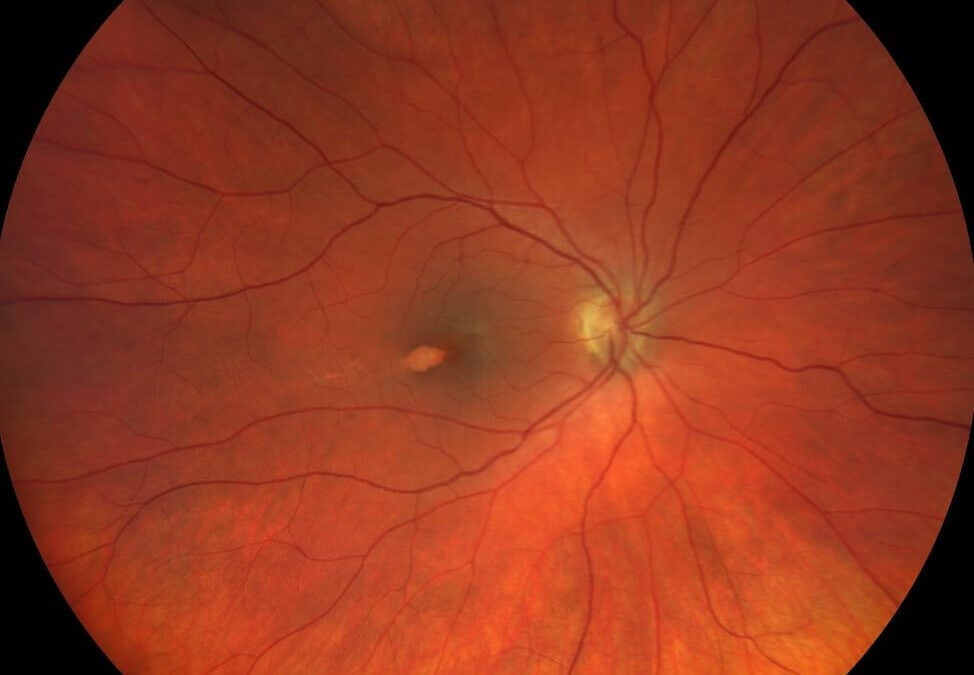
Torpedo Maculopathy
Torpedo maculopathy is a rare condition resulting in malformation of the outer retina. These lesions are often asymptomatic and found incidentally during routine eye examination. Although typically benign, there are rare reports of associated complications requiring treatment. Appropriate monitoring is thus required.
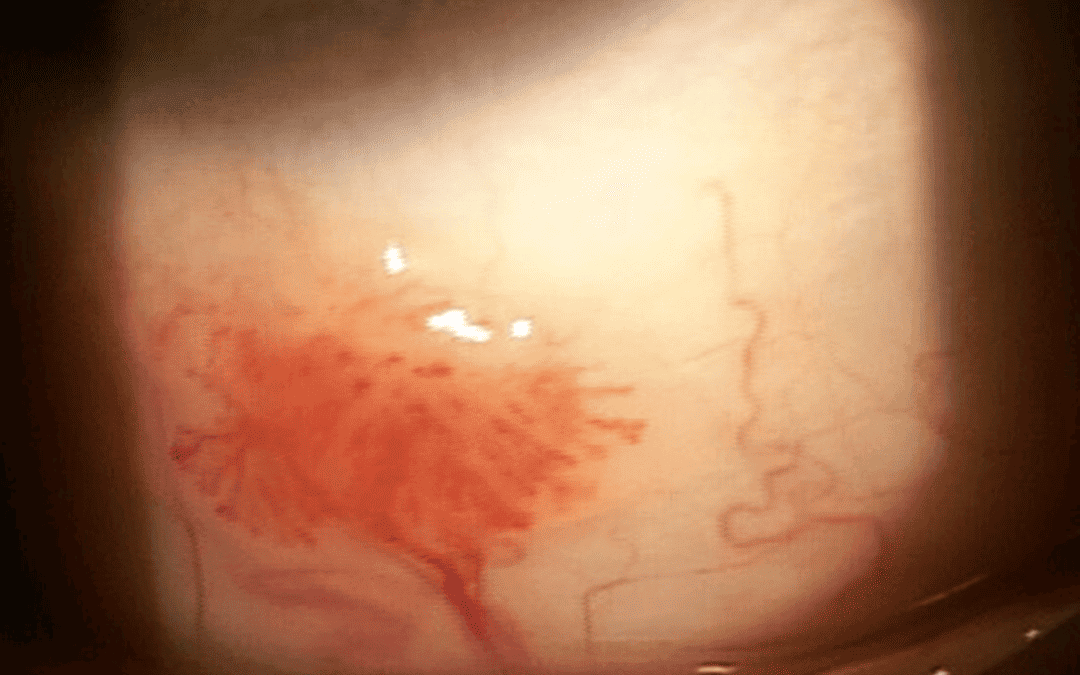
Recurrent Conjunctival Squamous Papilloma
This case features a 76-year-old Caucasian male with a conjunctival squamous papilloma regrowth. The initial lesion was removed via excisional…
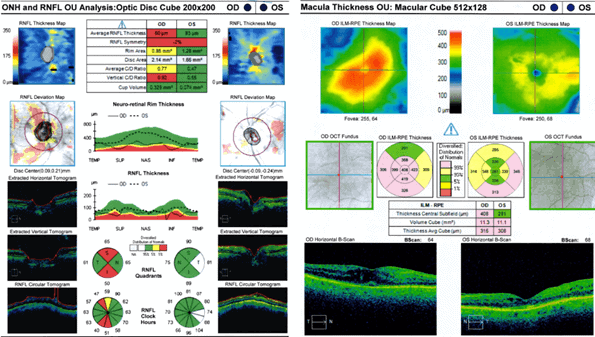
Charles Bonnet Syndrome Precipitated by Brimonidine Tartrate
Charles Bonnet Syndrome (CBS) induced by brimonidine tartrate ophthalmic solution has rarely been reported. CBS is a condition characterized by visual hallucinations in patients with vision loss and clear cognition. This condition is more prevalent in the elderly population, between the ages of 75 and 84 years old.

A Review of the Management of Fuchs Endothelial Corneal Dystrophy
Fuchs Endothelial Corneal Dystrophy leads to progressive visual deterioration that may cause acutely painful episodes. Medical management has been limited to prescribing hyperosmotic agents. The advancement in therapeutic and surgical management has led to earlier intervention, better visual prognosis, and improved quality of life for patients affected by FECD. Optometrists play a role in the management of this condition’s diagnosis, treatment, and postsurgical care.

Multitasking
It’s 2024 and we welcome you to the Volume 2 of the Journal of Medical Optometry. 2023 was our inaugural year and we grew by virtually every metric…

What Evidence Based Medicine is Not: Part 2
How do we, as busy clinicians in the trenches of patient care, appraise and apply EBM to our practice? If you’ve read all that I’ve written on this topic…
The Phenomenon of Quiescent Tomographically-Detected Macular Neovascularization
Macular neovascularization (MNV) is a pathophysiological precursor to local tissue destruction. Age-related macular degeneration is the predominant disease for MNV incidence. The spectrum of macular neovascular morphologies can be studied with optical coherence tomography angiography (OCTA) imaging and observed for vision-threatening activity.
PHOTO ESSAY: “New” Red Eye – A Case of Conjunctival Intraepithelial Neoplasia
Ocular surface squamous neoplasia (OSSN) covers a wide range of ocular diseases that affect the squamous epithelial cells on the surface of the eye. This includes conjunctival intraepithelial neoplasia, corneal epithelial dysplasia, squamous cell carcinoma, and mucoepidermoid carcinoma. Anterior segment OCT can be used to differentiate between CIN and other benign conjunctival lesions, by evaluating for epithelial activity, stromal invasion, and corneal involvement.
Highlighting hypertriglyceridemia with a case of lipemia retinalis
Severe hypertriglyceridemia can transiently cause the appearance of a salmon-colored fundus with creamy vessels which is known as lipemia retinalis
Diagnosing Macular Telangiectasia Type 2
MacTel type 2 is the most common subtype that results in atrophic changes and sometimes subretinal neovascularization (SRN). This case report will focus on a patient with MacTel type 2 and the management and treatment options pertinent to the case.
Torpedo Maculopathy
Torpedo maculopathy is a rare condition resulting in malformation of the outer retina. These lesions are often asymptomatic and found incidentally during routine eye examination. Although typically benign, there are rare reports of associated complications requiring treatment. Appropriate monitoring is thus required.
Recurrent Conjunctival Squamous Papilloma
This case features a 76-year-old Caucasian male with a conjunctival squamous papilloma regrowth. The initial lesion was removed via excisional…
Charles Bonnet Syndrome Precipitated by Brimonidine Tartrate
Charles Bonnet Syndrome (CBS) induced by brimonidine tartrate ophthalmic solution has rarely been reported. CBS is a condition characterized by visual hallucinations in patients with vision loss and clear cognition. This condition is more prevalent in the elderly population, between the ages of 75 and 84 years old.
A Review of the Management of Fuchs Endothelial Corneal Dystrophy
Fuchs Endothelial Corneal Dystrophy leads to progressive visual deterioration that may cause acutely painful episodes. Medical management has been limited to prescribing hyperosmotic agents. The advancement in therapeutic and surgical management has led to earlier intervention, better visual prognosis, and improved quality of life for patients affected by FECD. Optometrists play a role in the management of this condition’s diagnosis, treatment, and postsurgical care.
Multitasking
It’s 2024 and we welcome you to the Volume 2 of the Journal of Medical Optometry. 2023 was our inaugural year and we grew by virtually every metric…
What Evidence Based Medicine is Not: Part 2
How do we, as busy clinicians in the trenches of patient care, appraise and apply EBM to our practice? If you’ve read all that I’ve written on this topic…
The Phenomenon of Quiescent Tomographically-Detected Macular Neovascularization
Macular neovascularization (MNV) is a pathophysiological precursor to local tissue destruction. Age-related macular degeneration is the predominant disease for MNV incidence. The spectrum of macular neovascular morphologies can be studied with optical coherence tomography angiography (OCTA) imaging and observed for vision-threatening activity.
PHOTO ESSAY: “New” Red Eye – A Case of Conjunctival Intraepithelial Neoplasia
Ocular surface squamous neoplasia (OSSN) covers a wide range of ocular diseases that affect the squamous epithelial cells on the surface of the eye. This includes conjunctival intraepithelial neoplasia, corneal epithelial dysplasia, squamous cell carcinoma, and mucoepidermoid carcinoma. Anterior segment OCT can be used to differentiate between CIN and other benign conjunctival lesions, by evaluating for epithelial activity, stromal invasion, and corneal involvement.
Highlighting hypertriglyceridemia with a case of lipemia retinalis
Severe hypertriglyceridemia can transiently cause the appearance of a salmon-colored fundus with creamy vessels which is known as lipemia retinalis
Diagnosing Macular Telangiectasia Type 2
MacTel type 2 is the most common subtype that results in atrophic changes and sometimes subretinal neovascularization (SRN). This case report will focus on a patient with MacTel type 2 and the management and treatment options pertinent to the case.
Torpedo Maculopathy
Torpedo maculopathy is a rare condition resulting in malformation of the outer retina. These lesions are often asymptomatic and found incidentally during routine eye examination. Although typically benign, there are rare reports of associated complications requiring treatment. Appropriate monitoring is thus required.
Recurrent Conjunctival Squamous Papilloma
This case features a 76-year-old Caucasian male with a conjunctival squamous papilloma regrowth. The initial lesion was removed via excisional…
Charles Bonnet Syndrome Precipitated by Brimonidine Tartrate
Charles Bonnet Syndrome (CBS) induced by brimonidine tartrate ophthalmic solution has rarely been reported. CBS is a condition characterized by visual hallucinations in patients with vision loss and clear cognition. This condition is more prevalent in the elderly population, between the ages of 75 and 84 years old.
A Review of the Management of Fuchs Endothelial Corneal Dystrophy
Fuchs Endothelial Corneal Dystrophy leads to progressive visual deterioration that may cause acutely painful episodes. Medical management has been limited to prescribing hyperosmotic agents. The advancement in therapeutic and surgical management has led to earlier intervention, better visual prognosis, and improved quality of life for patients affected by FECD. Optometrists play a role in the management of this condition’s diagnosis, treatment, and postsurgical care.
Multitasking
It’s 2024 and we welcome you to the Volume 2 of the Journal of Medical Optometry. 2023 was our inaugural year and we grew by virtually every metric…
What Evidence Based Medicine is Not: Part 2
How do we, as busy clinicians in the trenches of patient care, appraise and apply EBM to our practice? If you’ve read all that I’ve written on this topic…
The Phenomenon of Quiescent Tomographically-Detected Macular Neovascularization
Macular neovascularization (MNV) is a pathophysiological precursor to local tissue destruction. Age-related macular degeneration is the predominant disease for MNV incidence. The spectrum of macular neovascular morphologies can be studied with optical coherence tomography angiography (OCTA) imaging and observed for vision-threatening activity.
PHOTO ESSAY: “New” Red Eye – A Case of Conjunctival Intraepithelial Neoplasia
Ocular surface squamous neoplasia (OSSN) covers a wide range of ocular diseases that affect the squamous epithelial cells on the surface of the eye. This includes conjunctival intraepithelial neoplasia, corneal epithelial dysplasia, squamous cell carcinoma, and mucoepidermoid carcinoma. Anterior segment OCT can be used to differentiate between CIN and other benign conjunctival lesions, by evaluating for epithelial activity, stromal invasion, and corneal involvement.
Highlighting hypertriglyceridemia with a case of lipemia retinalis
Severe hypertriglyceridemia can transiently cause the appearance of a salmon-colored fundus with creamy vessels which is known as lipemia retinalis
Diagnosing Macular Telangiectasia Type 2
MacTel type 2 is the most common subtype that results in atrophic changes and sometimes subretinal neovascularization (SRN). This case report will focus on a patient with MacTel type 2 and the management and treatment options pertinent to the case.
Torpedo Maculopathy
Torpedo maculopathy is a rare condition resulting in malformation of the outer retina. These lesions are often asymptomatic and found incidentally during routine eye examination. Although typically benign, there are rare reports of associated complications requiring treatment. Appropriate monitoring is thus required.
Recurrent Conjunctival Squamous Papilloma
This case features a 76-year-old Caucasian male with a conjunctival squamous papilloma regrowth. The initial lesion was removed via excisional…
Charles Bonnet Syndrome Precipitated by Brimonidine Tartrate
Charles Bonnet Syndrome (CBS) induced by brimonidine tartrate ophthalmic solution has rarely been reported. CBS is a condition characterized by visual hallucinations in patients with vision loss and clear cognition. This condition is more prevalent in the elderly population, between the ages of 75 and 84 years old.
A Review of the Management of Fuchs Endothelial Corneal Dystrophy
Fuchs Endothelial Corneal Dystrophy leads to progressive visual deterioration that may cause acutely painful episodes. Medical management has been limited to prescribing hyperosmotic agents. The advancement in therapeutic and surgical management has led to earlier intervention, better visual prognosis, and improved quality of life for patients affected by FECD. Optometrists play a role in the management of this condition’s diagnosis, treatment, and postsurgical care.
Multitasking
It’s 2024 and we welcome you to the Volume 2 of the Journal of Medical Optometry. 2023 was our inaugural year and we grew by virtually every metric…
What Evidence Based Medicine is Not: Part 2
How do we, as busy clinicians in the trenches of patient care, appraise and apply EBM to our practice? If you’ve read all that I’ve written on this topic…
The Phenomenon of Quiescent Tomographically-Detected Macular Neovascularization
Macular neovascularization (MNV) is a pathophysiological precursor to local tissue destruction. Age-related macular degeneration is the predominant disease for MNV incidence. The spectrum of macular neovascular morphologies can be studied with optical coherence tomography angiography (OCTA) imaging and observed for vision-threatening activity.
PHOTO ESSAY: “New” Red Eye – A Case of Conjunctival Intraepithelial Neoplasia
Ocular surface squamous neoplasia (OSSN) covers a wide range of ocular diseases that affect the squamous epithelial cells on the surface of the eye. This includes conjunctival intraepithelial neoplasia, corneal epithelial dysplasia, squamous cell carcinoma, and mucoepidermoid carcinoma. Anterior segment OCT can be used to differentiate between CIN and other benign conjunctival lesions, by evaluating for epithelial activity, stromal invasion, and corneal involvement.
Highlighting hypertriglyceridemia with a case of lipemia retinalis
Severe hypertriglyceridemia can transiently cause the appearance of a salmon-colored fundus with creamy vessels which is known as lipemia retinalis
Diagnosing Macular Telangiectasia Type 2
MacTel type 2 is the most common subtype that results in atrophic changes and sometimes subretinal neovascularization (SRN). This case report will focus on a patient with MacTel type 2 and the management and treatment options pertinent to the case.
Torpedo Maculopathy
Torpedo maculopathy is a rare condition resulting in malformation of the outer retina. These lesions are often asymptomatic and found incidentally during routine eye examination. Although typically benign, there are rare reports of associated complications requiring treatment. Appropriate monitoring is thus required.
Recurrent Conjunctival Squamous Papilloma
This case features a 76-year-old Caucasian male with a conjunctival squamous papilloma regrowth. The initial lesion was removed via excisional…
Charles Bonnet Syndrome Precipitated by Brimonidine Tartrate
Charles Bonnet Syndrome (CBS) induced by brimonidine tartrate ophthalmic solution has rarely been reported. CBS is a condition characterized by visual hallucinations in patients with vision loss and clear cognition. This condition is more prevalent in the elderly population, between the ages of 75 and 84 years old.
A Review of the Management of Fuchs Endothelial Corneal Dystrophy
Fuchs Endothelial Corneal Dystrophy leads to progressive visual deterioration that may cause acutely painful episodes. Medical management has been limited to prescribing hyperosmotic agents. The advancement in therapeutic and surgical management has led to earlier intervention, better visual prognosis, and improved quality of life for patients affected by FECD. Optometrists play a role in the management of this condition’s diagnosis, treatment, and postsurgical care.
Multitasking
It’s 2024 and we welcome you to the Volume 2 of the Journal of Medical Optometry. 2023 was our inaugural year and we grew by virtually every metric…
What Evidence Based Medicine is Not: Part 2
How do we, as busy clinicians in the trenches of patient care, appraise and apply EBM to our practice? If you’ve read all that I’ve written on this topic…
The Phenomenon of Quiescent Tomographically-Detected Macular Neovascularization
Macular neovascularization (MNV) is a pathophysiological precursor to local tissue destruction. Age-related macular degeneration is the predominant disease for MNV incidence. The spectrum of macular neovascular morphologies can be studied with optical coherence tomography angiography (OCTA) imaging and observed for vision-threatening activity.
PHOTO ESSAY: “New” Red Eye – A Case of Conjunctival Intraepithelial Neoplasia
Ocular surface squamous neoplasia (OSSN) covers a wide range of ocular diseases that affect the squamous epithelial cells on the surface of the eye. This includes conjunctival intraepithelial neoplasia, corneal epithelial dysplasia, squamous cell carcinoma, and mucoepidermoid carcinoma. Anterior segment OCT can be used to differentiate between CIN and other benign conjunctival lesions, by evaluating for epithelial activity, stromal invasion, and corneal involvement.
Highlighting hypertriglyceridemia with a case of lipemia retinalis
Severe hypertriglyceridemia can transiently cause the appearance of a salmon-colored fundus with creamy vessels which is known as lipemia retinalis
Diagnosing Macular Telangiectasia Type 2
MacTel type 2 is the most common subtype that results in atrophic changes and sometimes subretinal neovascularization (SRN). This case report will focus on a patient with MacTel type 2 and the management and treatment options pertinent to the case.
Torpedo Maculopathy
Torpedo maculopathy is a rare condition resulting in malformation of the outer retina. These lesions are often asymptomatic and found incidentally during routine eye examination. Although typically benign, there are rare reports of associated complications requiring treatment. Appropriate monitoring is thus required.
Recurrent Conjunctival Squamous Papilloma
This case features a 76-year-old Caucasian male with a conjunctival squamous papilloma regrowth. The initial lesion was removed via excisional…
Charles Bonnet Syndrome Precipitated by Brimonidine Tartrate
Charles Bonnet Syndrome (CBS) induced by brimonidine tartrate ophthalmic solution has rarely been reported. CBS is a condition characterized by visual hallucinations in patients with vision loss and clear cognition. This condition is more prevalent in the elderly population, between the ages of 75 and 84 years old.
A Review of the Management of Fuchs Endothelial Corneal Dystrophy
Fuchs Endothelial Corneal Dystrophy leads to progressive visual deterioration that may cause acutely painful episodes. Medical management has been limited to prescribing hyperosmotic agents. The advancement in therapeutic and surgical management has led to earlier intervention, better visual prognosis, and improved quality of life for patients affected by FECD. Optometrists play a role in the management of this condition’s diagnosis, treatment, and postsurgical care.
Multitasking
It’s 2024 and we welcome you to the Volume 2 of the Journal of Medical Optometry. 2023 was our inaugural year and we grew by virtually every metric…
What Evidence Based Medicine is Not: Part 2
How do we, as busy clinicians in the trenches of patient care, appraise and apply EBM to our practice? If you’ve read all that I’ve written on this topic…